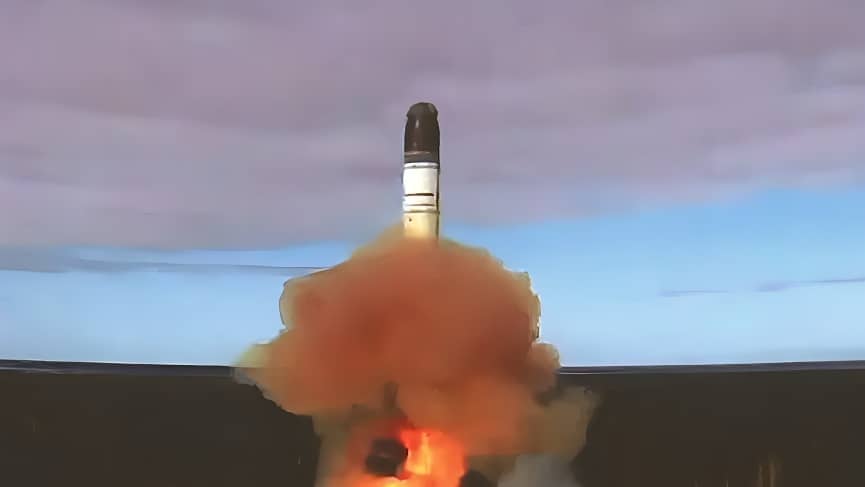
Russia has reportedly conducted a successful test of its next generation Sarmat intercontinental ballistic missile, with President Vladimir Putin describing the weapon system as one of the most powerful missiles in the world. The missile test has attracted global attention due to its strategic military significance and the current geopolitical environment involving major international powers.
The Sarmat missile, often referred to by defence analysts as a next generation strategic weapon system, is designed to strengthen Russia’s long range nuclear deterrence capabilities. Intercontinental ballistic missiles are capable of travelling extremely long distances and are considered a major component of modern strategic defence systems maintained by nuclear armed countries.
Russian officials stated that the missile test demonstrated the country’s technological and military capabilities in the field of strategic defence. President Vladimir Putin reportedly said that the missile would enhance the security of Russia and strengthen the nation’s defence infrastructure.
The development comes during a period of increasing global geopolitical tensions involving several major countries. International security discussions in recent years have increasingly focused on defence modernisation, military technology, missile systems, and strategic deterrence policies.
Defence experts explain that the Sarmat missile is intended to replace older Soviet era missile systems and provide improved operational capabilities. Reports suggest the missile is capable of carrying multiple warheads and travelling across long intercontinental ranges.
Military analysts note that strategic missile systems are often used by countries as part of their deterrence policies. Nuclear deterrence refers to the strategy of maintaining military capabilities to discourage potential aggression or conflict from rival nations.
The missile test has also generated international discussion regarding global arms control and strategic stability. Several countries and international organisations continue to emphasise the importance of diplomatic dialogue and arms control agreements aimed at reducing the risk of military escalation.
Relations between Russia and Western countries have remained tense due to ongoing geopolitical disputes, regional conflicts, economic sanctions, and security related disagreements. Developments involving advanced missile systems are therefore closely monitored by governments and defence agencies around the world.
Experts say that modern missile technology has become increasingly sophisticated with advancements in propulsion systems, navigation technology, and defence countermeasure capabilities. Countries investing in strategic defence systems often view such programs as essential for national security and geopolitical influence.
The announcement regarding the missile test has also attracted attention because of ongoing international tensions involving global security issues, military alliances, and regional conflicts. Analysts believe such developments may influence future discussions related to arms control negotiations and strategic defence planning.
At the same time, international observers stress the importance of maintaining communication and diplomatic engagement between major powers to prevent misunderstandings and reduce security risks. Global stability experts often highlight the need for dialogue during periods of heightened military activity and geopolitical competition.
Russia has continued to modernise various parts of its defence infrastructure in recent years, including missile systems, air defence capabilities, and military technology programs. Similar defence modernisation initiatives are also being pursued by several other countries worldwide.
Political observers note that announcements related to strategic weapons often carry both military and diplomatic significance. Such developments are closely examined not only for their technical capabilities but also for their potential impact on international relations and global security policies.
Overall, Russia’s reported test of the Sarmat intercontinental ballistic missile has become a significant international defence development. The event has drawn attention to strategic military modernisation, geopolitical competition, and ongoing global discussions regarding security, deterrence, and arms control.