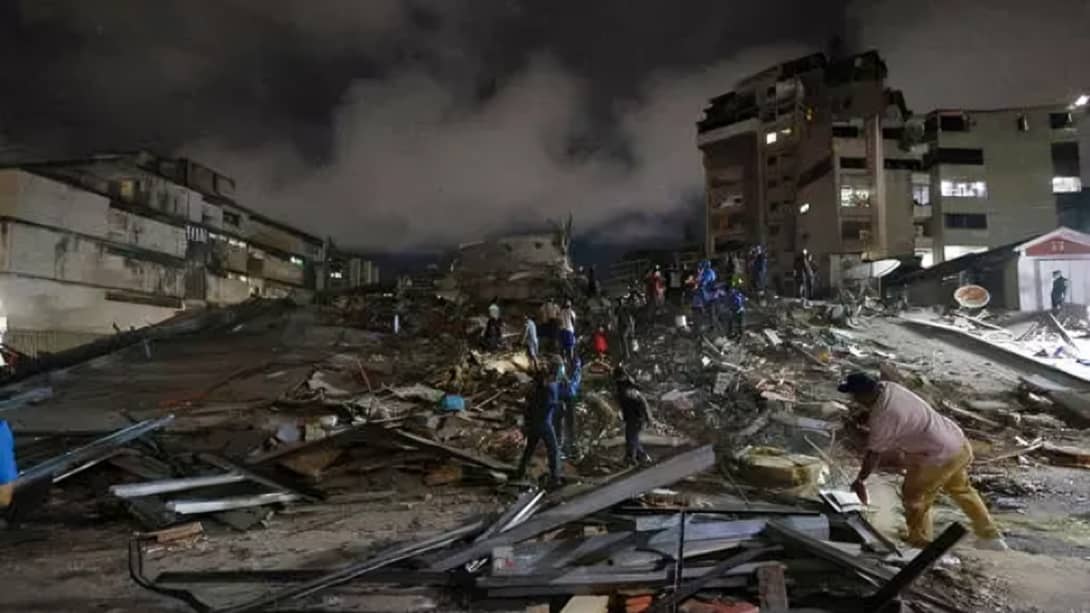

A powerful magnitude 7.2 earthquake struck off the northern Pacific coast of Japan on Thursday morning, shaking several cities and towns across the northeastern part of the country during the morning rush hour. The earthquake was widely felt across the region, prompting residents to evacuate buildings and follow emergency safety procedures.
According to Japanese authorities, the earthquake originated offshore along the Pacific coast. Strong ground shaking was reported in multiple prefectures, with tremors affecting transportation systems, businesses, schools, and public facilities. Emergency services responded quickly to assess the impact and assist local authorities where necessary.
Following an initial assessment, the Japan Meteorological Agency confirmed that no tsunami warning had been issued. Officials stated that the characteristics of the earthquake did not indicate a significant tsunami threat, although coastal monitoring continued as a precaution. Residents in coastal communities were advised to remain alert and follow official updates until authorities confirmed that conditions were stable.
Preliminary reports indicated that train services in some areas were temporarily suspended to allow safety inspections of railway tracks and infrastructure. Transportation operators conducted routine inspections before gradually restoring services where it was considered safe to do so.
Authorities also initiated inspections of roads, bridges, airports, public buildings, and utility infrastructure to identify any damage caused by the earthquake. Electricity and communication services were monitored to ensure that essential systems continued to function without major disruption.
As of the latest official updates, there were no immediate reports of widespread structural damage or large scale casualties. However, emergency management officials emphasized that detailed assessments would continue throughout the affected regions, as damage inspections often require several hours after a major seismic event.
Japan is one of the world's most earthquake prone countries because it is located along the Pacific Ring of Fire, an area where several major tectonic plates meet. The country maintains one of the world's most advanced earthquake monitoring and early warning systems, allowing authorities to issue alerts and coordinate emergency responses within seconds of significant seismic activity.
Disaster management agencies reminded residents to remain prepared for possible aftershocks, which commonly occur following strong earthquakes. Citizens were advised to monitor official announcements, avoid damaged structures until inspections are completed, and keep emergency supplies readily available.
Government agencies continue to coordinate with local authorities to monitor developments and provide assistance if required. Officials have urged the public to rely only on verified information released by government agencies and emergency services as inspections and safety evaluations continue across the affected areas.