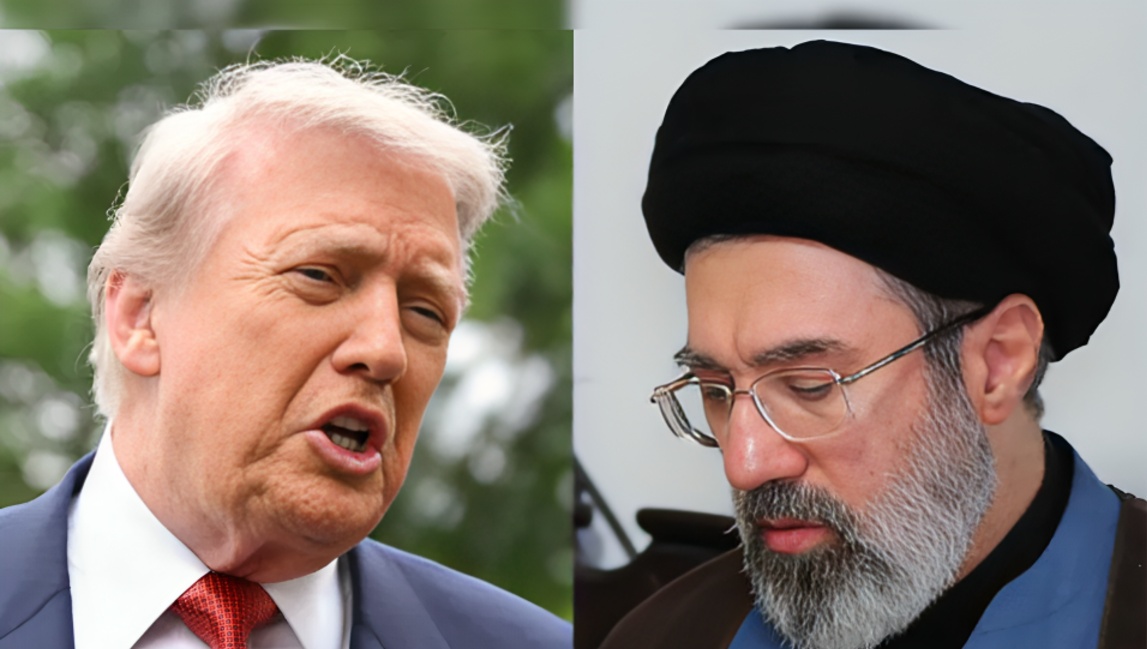
US President Donald Trump has said American officials have been engaged in discussions with mediators as diplomatic efforts to end the conflict with Iran continue, despite his recent rejection of Tehran’s latest truce proposal.
The latest development comes as the United States and Iran continue indirect communications through regional mediators. According to officials from both countries, US and Iranian representatives held separate discussions with mediators on September 28 as part of renewed efforts to find a way to end the ongoing conflict.
The discussions follow Trump's decision to reject a proposal presented by Iran. Trump said on September 26 that he had rejected Tehran's latest proposal, which had been conveyed through indirect negotiations during the United Nations General Assembly in New York.
The proposal was linked to a seven day roadmap put forward by Iran. Tehran had proposed steps involving the reopening of the Strait of Hormuz and the resumption of negotiations. Iranian officials said the proposal was aimed at creating conditions for broader discussions to end the conflict.
Trump's rejection of the proposal did not completely end diplomatic contacts. Instead, mediators continued communicating with both sides in an effort to narrow the differences between Washington and Tehran.
US officials have indicated that discussions through mediators remain active. According to reports, US envoys Steve Witkoff and Jared Kushner participated in indirect negotiations with Iranian Foreign Minister Abbas Araghchi during the UN General Assembly in New York. Qatari officials and other mediators were involved in relaying messages between the two sides.
Trump had earlier acknowledged that US officials were speaking with mediators regarding the possibility of reaching an agreement with Iran. The discussions have been conducted indirectly rather than through a formal direct negotiation between the two governments.
The latest talks are expected to focus on an amended version of Iran's seven day proposal, according to an official briefed on the negotiations. The proposal was initially presented by Iran during the UN General Assembly last week.
The Strait of Hormuz has emerged as one of the central issues in the negotiations. The waterway is a major route for international oil shipments and has been heavily affected by the conflict. Iran has linked the reopening of the strait to specific conditions, including an end to hostilities and changes in the US military blockade.
Iranian Foreign Minister Abbas Araghchi has said Tehran is prepared to consider diplomatic solutions but has maintained that certain conditions must be met. Iranian officials have also been communicating with Qatari and Pakistani mediators regarding possible arrangements.
According to reports, Iran has asked for the US blockade to be lifted, hostilities to end and restricted Iranian assets to be released as part of its conditions for reopening the Strait of Hormuz. Tehran has also linked the process to the resumption of discussions on the wider conflict.
The United States has approached the negotiations from a different position. Washington has placed greater emphasis on Iran's nuclear programme and has sought commitments from Tehran concerning nuclear restrictions and international monitoring.
Reports indicate that US officials have sought nuclear concessions from Iran as part of efforts to revive negotiations. The Trump administration has argued that preventing Iran from obtaining a nuclear weapon remains a central objective of its policy toward Tehran.
This difference in priorities remains one of the main challenges facing the diplomatic process. Iran has focused heavily on ending the conflict and reopening the Strait of Hormuz, while the United States has sought broader commitments concerning Iran's nuclear activities.
Despite the differences, the continuation of indirect discussions indicates that diplomatic channels remain open. Mediators have continued moving between the two sides and communicating proposals in an attempt to identify areas of possible agreement.
The current diplomatic activity follows several months of conflict between the United States and Iran. Previous ceasefire arrangements reached through mediation had also broken down, increasing international concern about a prolonged confrontation and its impact on energy markets and regional security.
The Strait of Hormuz has particular international importance because a significant share of global oil shipments normally passes through the waterway. Any prolonged disruption could affect energy supplies and international oil prices. The conflict has therefore attracted attention from governments and financial markets around the world.
The diplomatic efforts are also taking place against the backdrop of the United Nations General Assembly in New York. The presence of senior officials from the United States, Iran and several regional countries created an opportunity for mediators to conduct indirect discussions.
Iranian Foreign Minister Abbas Araghchi remained in New York during the diplomatic discussions and met with mediators. Iranian officials said exchanges through mediators had continued and become more serious following Tehran's latest proposal.
Trump, meanwhile, has continued to express a firm position on the conflict while also indicating that diplomatic options remain available. His administration has said that the United States is prepared to consider a non military solution if an arrangement can address Washington's concerns.
The latest discussions should therefore not be interpreted as a completed ceasefire agreement. No final settlement between Washington and Tehran has been announced, and the two sides continue to differ over the terms required to end hostilities.
The immediate focus of the mediation effort is expected to be an amended version of Iran's seven day proposal. Mediators are attempting to determine whether changes to the proposal can address the concerns raised by the United States while meeting Iran's conditions.
The talks also remain sensitive because previous diplomatic arrangements have failed to produce a lasting resolution. Both sides have continued to issue statements defending their respective positions, while regional mediators have attempted to prevent further escalation.
For now, the United States and Iran remain engaged in indirect diplomatic contacts. Trump's rejection of the earlier proposal has not closed the communication channel, but a new agreement has yet to emerge.
The coming discussions could determine whether the two sides can narrow their differences over the Strait of Hormuz, Iran's nuclear programme, sanctions, the continuation of hostilities and possible arrangements for a broader settlement.
The latest development therefore represents another attempt at diplomacy rather than a confirmed truce. US and Iranian officials are communicating separately with mediators, while regional governments continue efforts to facilitate an agreement that could reduce the conflict and restore stability in the region.