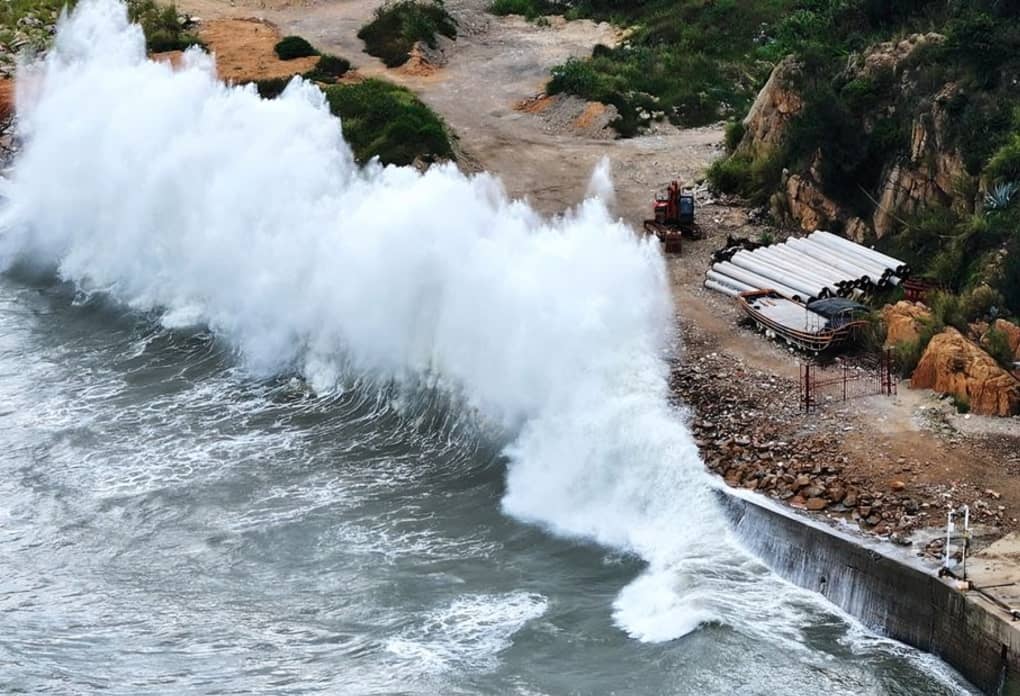

Typhoon Dolphin has caused widespread disruption across eastern China after making landfall in Zhejiang province, bringing strong winds, intense rainfall and the risk of flooding and landslides.
The storm made landfall in the Taizhou area of Zhejiang with sustained winds of approximately 151 kilometres per hour. Authorities responded by evacuating residents from vulnerable areas and issuing warnings as the system moved inland. More than one million people were evacuated across eastern China, according to reports, reflecting the scale of the preparations undertaken to protect residents from the storm.
Zhejiang was among the areas most affected as Dolphin approached the Chinese mainland. Strong winds and heavy rain created difficult conditions for residents and emergency services. Flooding was reported in several locations, while authorities remained concerned about possible landslides in areas receiving prolonged rainfall.
Shanghai, one of China's largest cities and a major international transport hub, also experienced significant disruption. More than 1,300 flights were cancelled at Shanghai's Pudong and Hongqiao airports as authorities responded to the deteriorating weather conditions. Ferry services and other transportation operations were also suspended in affected areas.
The weather system weakened after moving inland, but the danger did not immediately disappear. Forecasters warned that heavy rainfall could continue across several provinces, including Anhui, Jiangsu and Shandong. Further rainfall could increase the risk of flash flooding and landslides even as the strongest winds associated with the typhoon decline.
The impact of Dolphin has extended beyond China's mainland. The storm also affected weather conditions in neighbouring parts of East Asia and intensified seasonal rainfall in the Philippines. Northern Taiwan also experienced rainfall and travel disruptions associated with the storm.
The large-scale evacuations in China were carried out as a precaution against the combined risks posed by strong winds, heavy rainfall and rising water levels. Authorities have urged residents in affected areas to follow official instructions and avoid unnecessary travel during periods of severe weather.
Shanghai's aviation disruption is particularly significant because the city is one of Asia's busiest transportation centres. The cancellation of more than 1,300 flights affected thousands of passengers and created difficulties for domestic and international travel. Airlines and airport authorities have been working to restore operations as weather conditions improve.
The storm has also affected commercial and economic activity in eastern China. Severe weather can interrupt road, rail, maritime and air transportation, while businesses may temporarily suspend operations to protect employees and property.
Emergency response teams have been deployed in affected areas to assist residents, deal with flooding and respond to reports of people becoming trapped in homes or other locations. Local authorities have continued monitoring rivers, drainage systems and areas vulnerable to landslides.
The movement of Dolphin inland means that its effects are expected to shift from extreme coastal winds towards prolonged rainfall over inland regions. This can create a different set of risks because saturated ground and rising water levels can lead to flooding and landslides even after a storm has weakened.
Officials are therefore continuing to monitor the storm's path and rainfall forecasts. Residents in areas under weather warnings have been advised to remain alert and follow instructions issued by local authorities.
The storm also demonstrates the challenges faced by densely populated coastal regions during major tropical weather events. Large cities such as Shanghai have extensive infrastructure and transportation networks that can be severely affected by strong winds and heavy rainfall.
For travellers, the immediate priority remains checking flight and transport information before beginning journeys. Flight schedules can change rapidly during severe weather, and passengers affected by cancellations may need to contact airlines for updated travel arrangements.
For authorities, the focus remains on preventing casualties, managing flooding and ensuring that essential services continue operating. Rescue and emergency teams are expected to remain active while heavy rainfall continues.
Although Typhoon Dolphin has weakened after making landfall, its rainfall threat remains important. Several provinces could continue to experience significant precipitation as the system moves farther inland.
The latest situation highlights the importance of early warnings and large-scale evacuation measures during severe tropical storms. With more than one million people moved to safer locations and major transportation services disrupted, the storm has already had a substantial impact on eastern China.
Authorities will continue monitoring rainfall, river levels and landslide risks as Dolphin moves inland. The situation is expected to gradually improve as the weather system weakens, although heavy rainfall could continue to cause localised flooding and other hazards in the coming days.