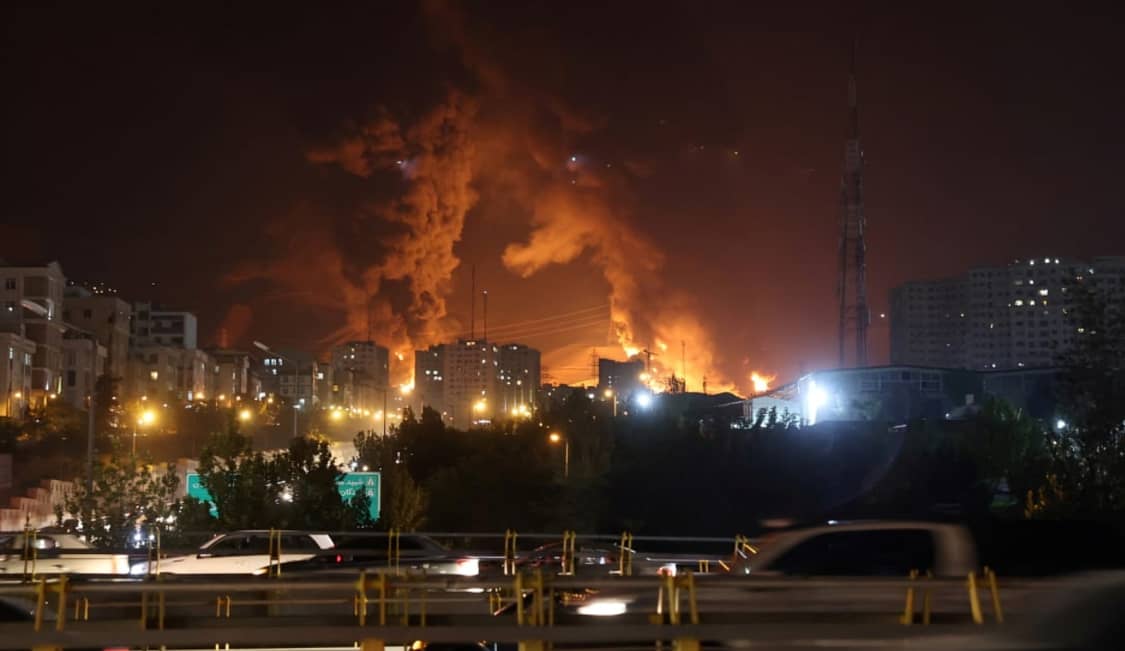

Tensions in the Middle East have intensified following reports of fresh military action involving the United States and Iran, raising concerns about the potential for a wider regional conflict. According to reports, the United States carried out another round of airstrikes targeting locations inside Iran, while Iran responded with missile and drone attacks reportedly directed toward Bahrain, Kuwait, and Jordan.
The latest developments mark another escalation in an already volatile security situation that has drawn international attention. Governments across the region continue to monitor the conflict closely as military operations and retaliatory actions increase concerns about regional stability and civilian safety.
Reports indicate that the latest US military action targeted strategic locations within Iran. While officials have described the strikes as part of ongoing military operations, detailed information regarding the specific targets, damage assessments, and operational outcomes has not been fully disclosed. Independent verification of battlefield claims remains limited as the situation continues to evolve.
Iran, in response, reportedly launched missiles and unmanned aerial vehicles toward Bahrain, Kuwait, and Jordan. Authorities in the affected countries have activated security measures while monitoring potential threats to critical infrastructure and civilian areas. Official statements from the respective governments are expected to provide further clarity regarding the impact of the reported attacks.
The current confrontation has significantly increased geopolitical tensions across the Gulf region. Bahrain, Kuwait, and Jordan are strategically important countries with close security relationships with several international partners, making any military developments involving these nations a matter of global concern.
International observers have expressed concern that continued military exchanges could increase the risk of broader regional instability. The Middle East remains one of the world's most strategically significant regions due to its energy infrastructure, major shipping routes, and geopolitical importance. Any prolonged conflict could affect international trade, energy markets, aviation routes, and diplomatic relations.
Global leaders have repeatedly called for restraint from all parties involved. International organizations and several governments have urged diplomatic engagement to prevent further escalation and reduce the possibility of a wider military confrontation. Diplomatic channels remain active as countries continue efforts to encourage dialogue and de-escalation.
Military analysts note that modern conflicts increasingly involve a combination of conventional air operations, precision-guided missiles, unmanned aerial systems, cyber capabilities, and intelligence-driven operations. Such developments make conflicts more complex while increasing uncertainty regarding future military responses.
Financial markets have also reacted to the evolving situation. Rising geopolitical tensions in the Middle East often influence global oil prices, investor sentiment, shipping costs, and currency markets. Analysts continue to monitor developments closely because any disruption to energy production or transportation could have broader economic consequences worldwide.
Humanitarian organizations have also expressed concern regarding the potential impact on civilians. Escalating military operations may affect access to essential services, transportation networks, and humanitarian assistance in affected areas. International agencies continue to assess the evolving humanitarian situation while preparing contingency plans should conditions deteriorate further.
Governments around the world are closely monitoring developments and have advised their citizens to follow official travel advisories and security guidance when visiting or residing in affected regions. Several countries have also increased diplomatic consultations as the situation remains highly dynamic.
As military operations continue, the full extent of the latest exchanges remains subject to official confirmation from the involved governments. The situation continues to evolve rapidly, and additional information is expected as authorities release verified updates regarding military operations, security measures, and diplomatic efforts aimed at preventing further escalation.