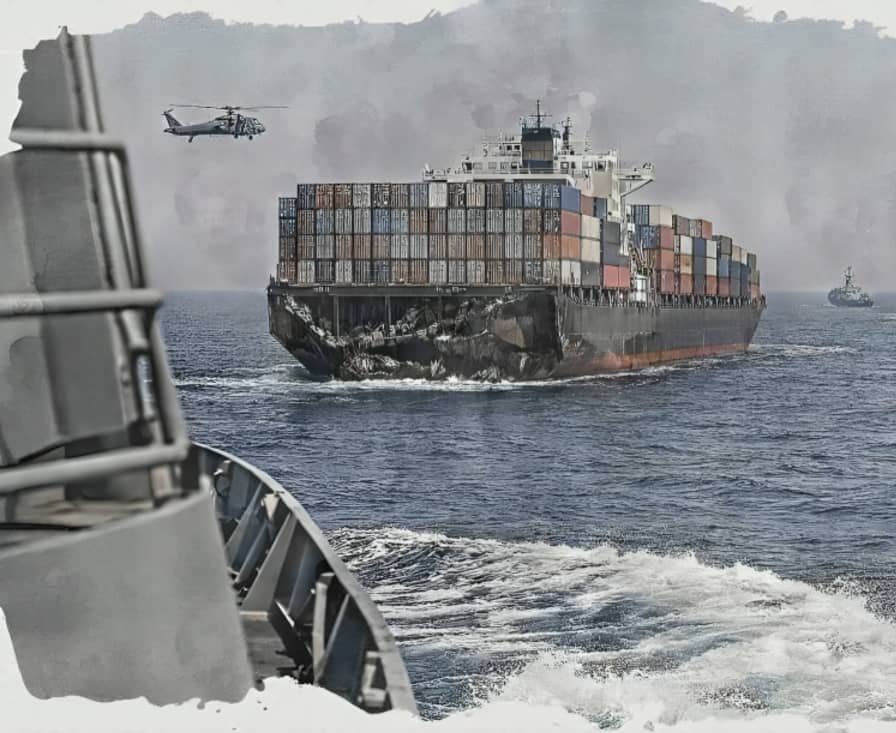

A major maritime security incident has been reported in the Gulf of Oman after US military forces fired on a Panama flagged cargo vessel accused of attempting to breach an American blockade on Iranian ports.
The vessel, identified as the Vela Nova, was reportedly targeted by a US Navy helicopter after American forces alleged that its crew ignored repeated warnings. According to the US Central Command, the vessel was attempting to sail towards an Iranian port and thereby violate the US blockade.
The incident took place on August 11, 2026, amid continuing tensions between Washington and Tehran. The confrontation has raised fresh concerns about the safety of commercial shipping through the Gulf of Oman and other important maritime routes in the region.
US Central Command said that a Navy helicopter fired two Hellfire missiles at the Vela Nova. The strikes reportedly hit the ship’s engine room and disabled its steering equipment. The US military said the action was taken after the crew allegedly failed to comply with repeated warnings from American forces.
The incident represents a significant escalation involving a commercial vessel because the ship was not described as a military target. The US military has said its blockade is intended to prevent vessels from entering or leaving Iranian ports without authorisation.
According to reports, the Vela Nova was carrying a civilian crew. Seventeen crew members were reported to be accounted for following the incident, and there were no immediate reports of fatalities. Other reports said the vessel suffered damage and that a fire was extinguished after the strike.
The exact circumstances surrounding the ship’s intended destination and cargo remain an important part of the developing story. US officials have alleged that the vessel was attempting to reach an Iranian port, while available reports have not established that the ship was carrying military material or other prohibited cargo.
The US action comes as Washington continues to enforce maritime restrictions linked to its pressure campaign against Iran. The Gulf of Oman is strategically important because it connects the Arabian Sea with the Strait of Hormuz, one of the world's most important routes for international energy shipments.
Any disruption to commercial shipping in this region can have wider consequences for global trade and energy markets. The Strait of Hormuz is particularly significant because a large share of global oil and gas shipments traditionally passes through the waterway.
The latest incident is also taking place against the background of wider military tensions in the Middle East. US and Iranian forces have remained involved in a broader confrontation, while diplomatic efforts have faced difficulties. Recent attacks involving commercial shipping have increased concerns among international maritime operators.
The US military has reported that it has already intercepted or disabled several commercial vessels as part of its enforcement of the blockade. US Central Command said that dozens of commercial vessels had been affected by the operation, while some vessels had been boarded or redirected.
The incident involving the Vela Nova is therefore being closely watched by the international shipping industry. Commercial operators operating near Iran and the Gulf region face increased security risks because vessels could potentially be stopped, redirected or subjected to military action if authorities believe they are violating maritime restrictions.
The situation also raises questions about freedom of navigation and the legal framework surrounding naval blockades. The legality of specific military actions can depend on the circumstances, applicable international law and the nature of the conflict. The US military has presented the strike as an enforcement action against a vessel that allegedly ignored warnings.
The incident could further increase pressure on shipping companies operating in the region. Higher security risks can lead to changes in shipping routes, additional insurance costs and delays in the movement of goods and energy supplies.
The Gulf of Oman has already become an important area of concern because of its proximity to Iran and the Strait of Hormuz. Any prolonged disruption could affect international supply chains, particularly energy markets that depend heavily on maritime transportation through the region.
For the crew of the Vela Nova, the immediate priority following the strike was safety and evacuation. Reports indicated that the crew members were accounted for after the vessel was disabled.
The incident is likely to receive further attention as more information becomes available about the ship’s route, cargo, communications with US forces and the precise circumstances that led to the strike.
For now, the US military maintains that the vessel attempted to violate the blockade and ignored repeated warnings. The incident highlights the growing risks faced by commercial vessels operating around Iranian waters and demonstrates how military tensions in the region are increasingly affecting civilian maritime traffic.
The Vela Nova incident could also have broader implications for diplomatic efforts between the United States and Iran. With maritime routes already under pressure, further confrontations involving commercial vessels could make efforts to reduce tensions more difficult.
The situation remains developing, and further statements from US authorities, Iranian officials and maritime organisations are expected to provide additional information about the incident and its wider consequences.