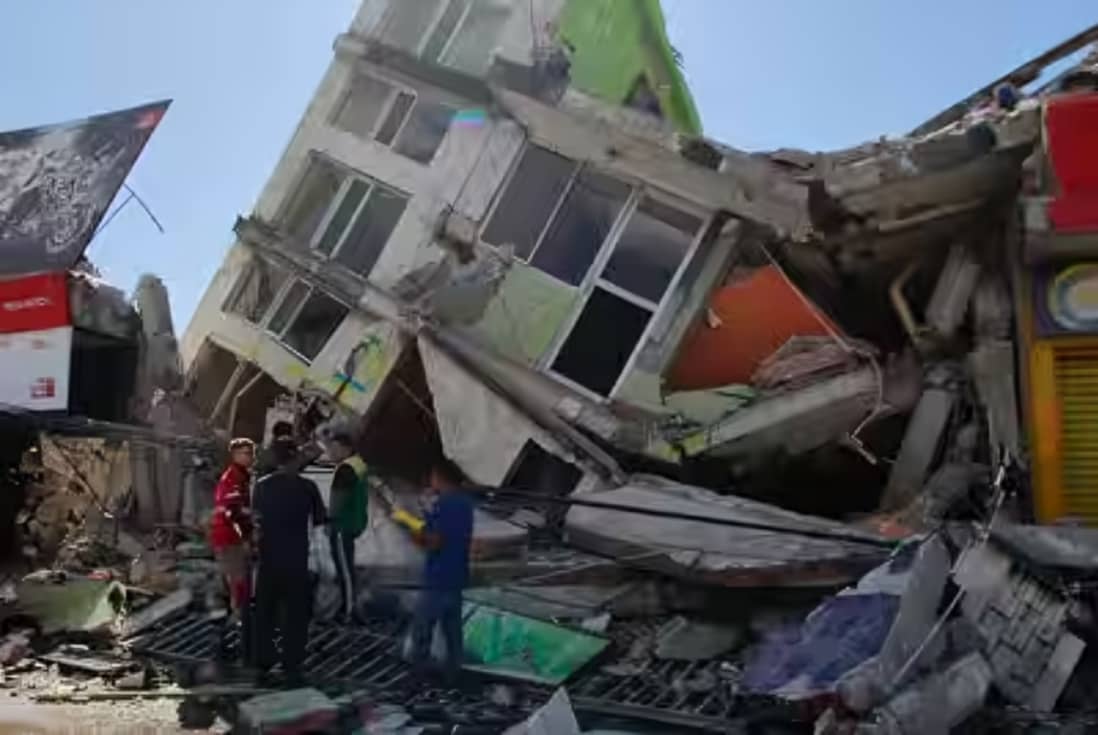

A powerful earthquake has struck western Colombia, leaving at least 132 people dead and causing widespread damage across several affected areas. The strong tremor damaged buildings, hospitals and infrastructure, while emergency teams continued rescue and relief operations following the disaster.
According to the US Geological Survey, the earthquake had a magnitude of 7.4 and occurred at around 7:34 am local time on Monday. The epicentre was reported at a depth of approximately 107 kilometres below the surface.
The earthquake caused significant disruption in the affected region. Several buildings were damaged, while hospitals and other essential facilities were also affected. Roads and other infrastructure suffered damage, creating additional challenges for emergency services attempting to reach affected communities.
Rescue workers were deployed to areas where people were reportedly trapped beneath damaged structures. Search and rescue operations continued as emergency personnel assessed the extent of the destruction and looked for survivors.
The reported death toll has made the earthquake one of the most serious recent seismic disasters in the region. Authorities are expected to continue updating the casualty figures as rescue operations progress and more information becomes available.
Earthquakes are a recurring natural hazard across Latin America because large parts of the region are located near active tectonic boundaries. Countries along the Pacific side of South and Central America are particularly vulnerable to powerful earthquakes.
Colombia is also exposed to seismic activity because of its geographical location and the interaction of several tectonic plates. Earthquakes can occur at different depths and intensities, making preparedness and emergency response important for communities across the country.
The latest disaster has also revived memories of some of the deadliest earthquakes recorded in Latin American history. Major earthquakes in countries including Peru, Chile, Mexico, Haiti and Ecuador have caused large numbers of deaths and extensive destruction over the decades.
The human impact of major earthquakes is often determined not only by the magnitude of the tremor but also by its depth, location, building standards, population density and the ability of emergency services to respond quickly.
In the case of the Colombian earthquake, the reported depth of about 107 kilometres is an important factor in understanding the event. However, the extent of damage depends on several conditions, including the distance of populated areas from the epicentre and the structural strength of buildings.
Following the earthquake, authorities and emergency agencies began assessing damage and coordinating rescue operations. Medical facilities were placed under pressure as injured people required treatment, while emergency workers worked to clear affected areas.
Residents in affected communities were urged to follow instructions issued by local authorities and emergency agencies. After a major earthquake, officials typically monitor the possibility of aftershocks and assess damaged structures before allowing people to return to potentially unsafe buildings.
The disaster has also highlighted the importance of earthquake preparedness. Emergency experts generally recommend that residents know evacuation procedures, identify safe locations and maintain emergency supplies. Governments and local authorities also play an important role by enforcing construction standards and developing effective disaster response systems.
The earthquake in Colombia has drawn international attention because of the reported scale of casualties and destruction. As rescue operations continue, authorities are expected to provide further information about the number of people affected, damaged buildings and infrastructure losses.
The final impact of the disaster will become clearer after search and rescue teams complete their initial assessments. The death toll may also change as emergency workers reach areas that remain difficult to access.
The earthquake serves as a reminder of the continuing seismic risks faced by countries across Latin America. The region has experienced some of the world's most destructive earthquakes, making preparedness, resilient infrastructure and rapid emergency response essential for reducing loss of life during future disasters.