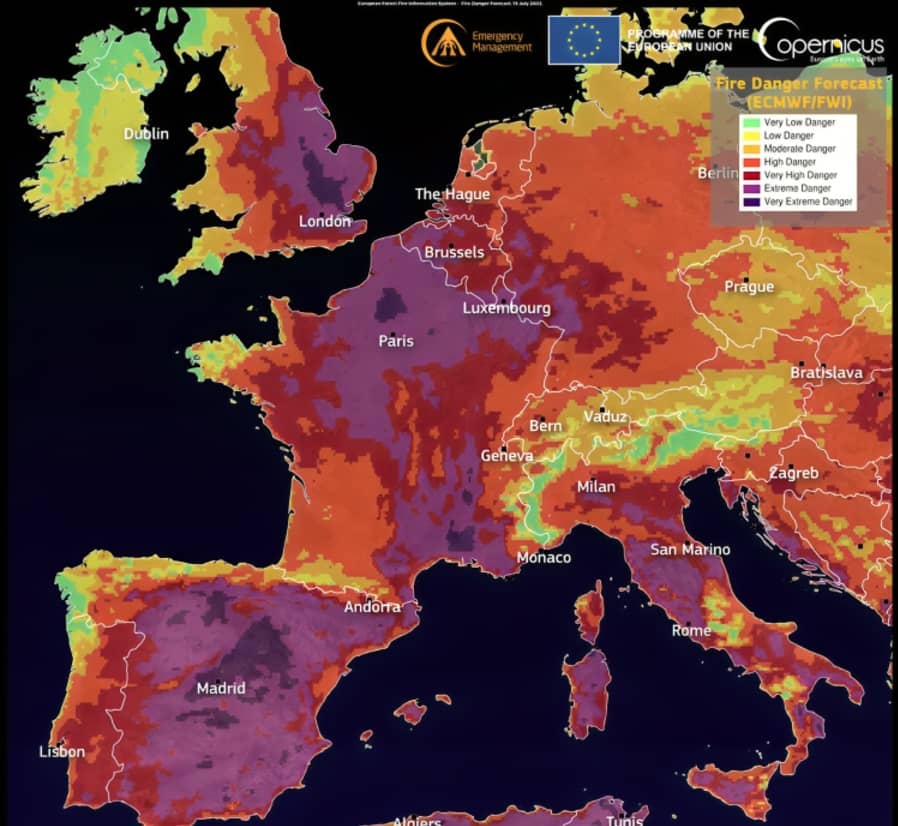

A powerful heatwave has gripped large parts of Europe, bringing unusually high temperatures to several countries and prompting authorities to issue public health advisories and emergency warnings. The extreme weather event has affected millions of people across the continent, disrupting daily life and increasing concerns about the growing impact of climate change.
Countries in Southern and Western Europe have reported some of the highest temperatures during the current heatwave. Spain, Italy, Greece, Portugal, and parts of France have experienced prolonged periods of intense heat, with temperatures in several regions climbing well above seasonal norms. Meteorological agencies have issued heat alerts as authorities work to protect vulnerable populations, including older adults, children, and individuals with existing health conditions.
The heatwave has also increased the risk of wildfires across many parts of Europe. Dry vegetation, strong winds, and persistent high temperatures have created conditions that allow fires to spread rapidly. Emergency services in several countries have remained on high alert, while local governments have introduced restrictions aimed at reducing fire risks.
Health officials have advised residents to stay hydrated, avoid outdoor activities during peak afternoon temperatures, and seek cooler indoor environments whenever possible. Hospitals and emergency services in some regions have reported increased demand due to heat-related illnesses, including dehydration, heat exhaustion, and heatstroke.
Meteorologists explain that the extreme temperatures are being driven by a strong high-pressure system that has settled over parts of Europe. Such systems can trap hot air over large areas for extended periods, leading to prolonged heatwaves. In addition, warm air masses originating from North Africa have contributed to the sharp rise in temperatures across several countries.
Climate scientists note that while heatwaves are a natural weather phenomenon, their frequency and intensity have increased in recent decades. Research indicates that global warming has made extreme heat events more likely and more severe. Rising global temperatures have altered weather patterns, increasing the chances of prolonged periods of unusually hot conditions.
The economic impact of the heatwave is also being closely monitored. Agriculture, energy production, transportation, and tourism sectors may face challenges as extreme temperatures continue. Farmers in some regions have expressed concerns about crop damage and water shortages, while energy providers are experiencing increased demand for cooling systems.
Governments across Europe have implemented various measures to respond to the situation. Public cooling centers have been opened in some cities, while local authorities are distributing information on heat safety and emergency preparedness. Environmental agencies are also monitoring water resources and wildfire conditions as temperatures remain elevated.
Experts warn that extreme weather events such as heatwaves are expected to become more common as global temperatures continue to rise. They emphasize the importance of climate adaptation strategies, improved infrastructure resilience, and public awareness campaigns to help communities manage future weather extremes.
As the heatwave continues, meteorological agencies are closely tracking weather developments and providing updated forecasts. Authorities remain focused on minimizing health risks and ensuring public safety while preparing for the possibility of continued high temperatures in the coming days.