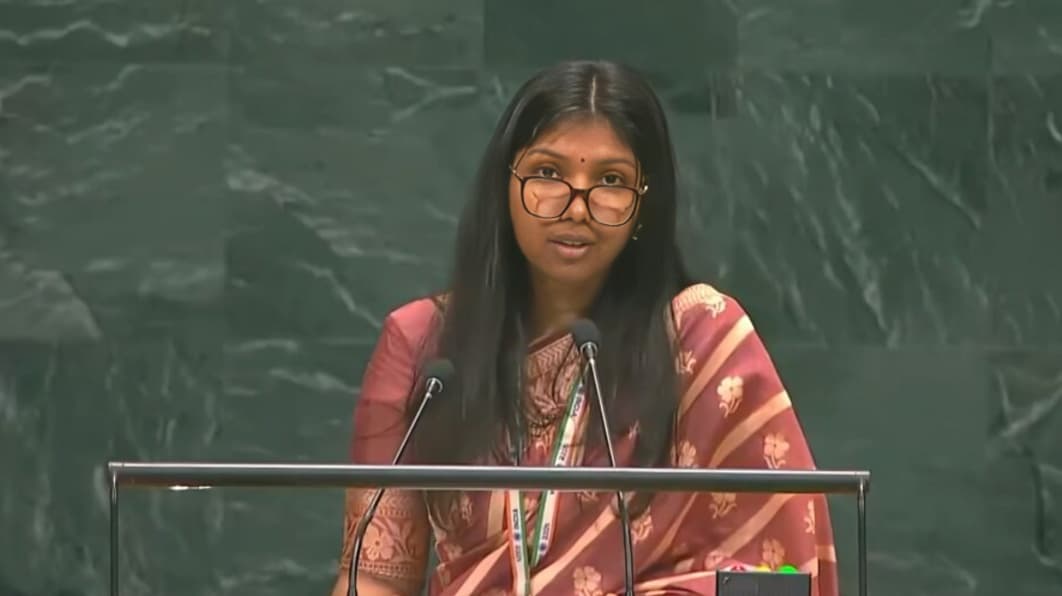
India Raises Concerns Over Politicisation of UN Human Rights Council and Calls for Equal Treatment
India has called for fairness, equal treatment and international cooperation in the functioning of the United Nations Human Rights Council, stating that the credibility of the organisation depends on its ability to treat all countries equally. India also cautioned against the politicisation of human rights issues and warned that selective approaches could weaken the Council's effectiveness.
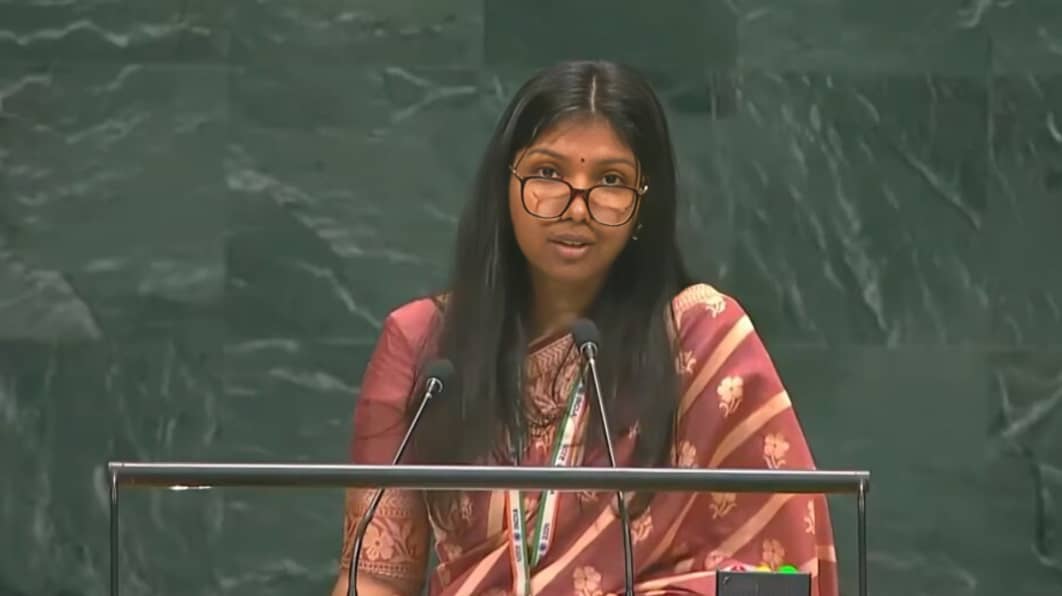
The position was presented by Bhavika Mangalanandan, First Secretary at India's Permanent Mission to the United Nations, during the United Nations General Assembly's debate on the report of the Human Rights Council on Friday. She emphasised that human rights concerns should be addressed through dialogue, cooperation and constructive engagement rather than political pressure or selective treatment.
During her address, Mangalanandan said that the credibility of the Council rested on even-handedness. She expressed concern over country-specific mandates pursued without the engagement of the country concerned. According to India's position, such approaches rarely improve human rights conditions on the ground and could instead create divisions among members of the Council.
India argued that countries should be given opportunities to participate in discussions concerning their human rights situations. The government believes that constructive engagement and cooperation can contribute more effectively to addressing concerns than approaches that create confrontation between nations.
Mangalanandan also highlighted the importance of the Universal Periodic Review mechanism. The Universal Periodic Review, commonly known as UPR, is a process through which the human rights records of all United Nations member states are examined. It provides an opportunity for countries to participate in the review process, discuss recommendations and engage with other member states.
India described the UPR as an appropriate platform because it is based on cooperation and engagement and applies equally to all countries. The mechanism allows nations to review human rights developments and consider recommendations through a common international framework.
Another important issue raised by India was the need to give equal importance to different categories of human rights. Mangalanandan stated that economic, social and cultural rights, along with the right to development, should receive the same attention as civil and political rights.
She pointed out that poverty, debt and limited access to financing and technology remain major obstacles to the enjoyment of human rights in many developing countries. India maintained that these challenges require international cooperation and support rather than coercive approaches.
The Indian representative also referred to the importance of addressing terrorism as a serious threat to human rights, particularly the fundamental right to life. She called on the Human Rights Council to give sustained attention to the issue and emphasised India's position of zero tolerance towards terrorism.
India's remarks also addressed the functioning and resource management of the Human Rights Council. Mangalanandan said that the Council should fulfil its responsibilities within the resources available to it. She called for transparent and member-driven measures to streamline its work.
India expressed concern that efforts to rationalise the Council's activities should not disproportionately affect mandates dealing with development and economic, social and cultural rights. The country also emphasised the need for adequate and predictable funding for the United Nations human rights system through its regular budget.
According to India's position, the priorities of the human rights system should not be excessively influenced by voluntary contributions earmarked for specific purposes. Predictable funding, India argued, would help the Council carry out its responsibilities in a balanced and consistent manner.
The Indian representative also raised concerns about duplication of work between the Human Rights Council and the United Nations General Assembly. She suggested considering mechanisms to avoid multiple resolutions and initiatives dealing with similar subjects in both bodies.
Mangalanandan further referred to the relationship between the Human Rights Council and the General Assembly's Third Committee, which handles social, humanitarian and cultural issues. She expressed concern about increasing instances of the Council directing reporting activities to the Third Committee, including reports by Special Rapporteurs.
India believes that the responsibilities of different United Nations bodies should remain clearly defined to avoid unnecessary duplication and maintain the specialised role of the Human Rights Council.
The statement also recalled External Affairs Minister S Jaishankar's earlier remarks at the High-Level Segment of the 61st Human Rights Council in February 2026. Jaishankar had emphasised that human rights could be advanced through dialogue, capacity-building and genuine partnerships rather than politicisation, selectivity and double standards.
India's latest position reflects its continued emphasis on cooperation and equal treatment in international human rights discussions. The country has also highlighted the importance of balancing civil and political rights with economic, social and cultural rights, particularly when addressing the challenges faced by developing nations.
India returned to the Human Rights Council for its seventh term covering the 2026 to 2028 period. Its participation in the Council provides an opportunity to present its views on international human rights policies, institutional functioning and cooperation among member states.
The remarks made at the United Nations General Assembly have brought attention to India's concerns about the methods used by the Human Rights Council to address country-specific situations. India has called for a more balanced approach that encourages dialogue, respects equal treatment and focuses on practical improvements in human rights conditions.
The discussion also highlights the broader debate over how international institutions should address human rights concerns while maintaining cooperation among member states. India's statement has placed fairness, transparency, development rights, counterterrorism and institutional accountability among the key issues in its approach to the functioning of the UN Human Rights Council