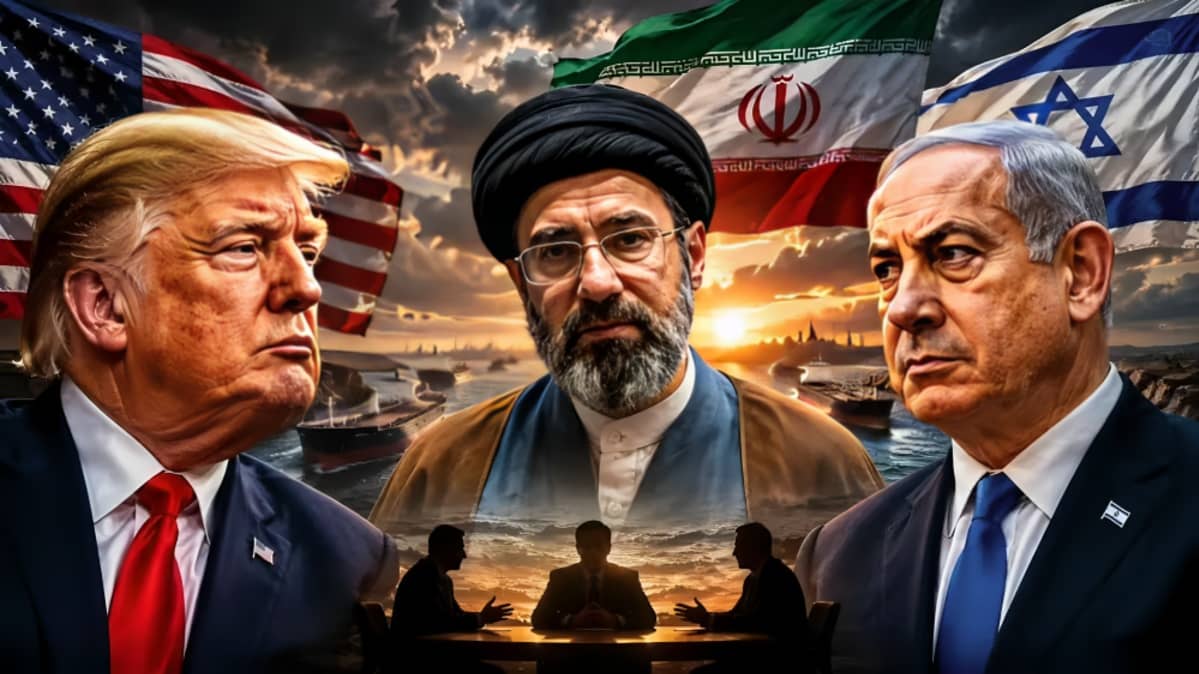

Former United States President Donald Trump has reportedly sought key modifications to a draft agreement related to Iran, with particular emphasis on nuclear material controls and strategic maritime provisions linked to the Strait of Hormuz.
According to reports, the suggested changes focus on tightening conditions surrounding Iran’s nuclear-related materials, which have long been a central issue in international negotiations. The discussions are aimed at preventing nuclear escalation while ensuring greater transparency and compliance with international monitoring standards.
The Strait of Hormuz, a narrow but highly significant maritime passage in the Middle East, has also emerged as a critical point in the proposed revisions. The waterway is one of the most important global energy transit routes, with a substantial portion of the world’s oil and gas shipments passing through it. Any disruption in this region has historically had a direct impact on global energy prices and international trade stability.
The reported push for amendments reflects ongoing concerns among global powers regarding both nuclear proliferation risks and regional security dynamics. The United States and its allies have consistently emphasized the need for strict verification mechanisms in any agreement involving Iran’s nuclear program.
Diplomatic negotiations around Iran’s nuclear framework have remained complex over the years, involving multiple rounds of discussions between Iran and major world powers. Previous agreements have faced challenges related to compliance, enforcement and geopolitical tensions in the Middle East.
Analysts note that any changes to a draft deal would require extensive negotiation and consensus among involved parties. The focus on nuclear material suggests continued efforts to limit enrichment activities and ensure that nuclear capabilities are used strictly for civilian purposes.
The Strait of Hormuz element highlights broader strategic considerations beyond nuclear issues. Control and security of this maritime corridor are viewed as essential for maintaining stability in global energy supply chains. Even the possibility of restrictions or tensions in the region often leads to fluctuations in international oil markets.
While the reported proposals have not been officially detailed by all negotiating parties, they indicate that discussions remain active and evolving. The emphasis on both nuclear safeguards and maritime security underscores the multi layered nature of the negotiations.
Foreign policy experts suggest that any final agreement will need to balance security concerns with diplomatic flexibility. Achieving such a balance has historically been challenging due to differing priorities among global stakeholders.
At present, the situation remains at the discussion and proposal stage, with no finalized agreement announced. Further developments are expected as diplomatic talks continue between relevant parties in the coming weeks.
The evolving nature of the negotiations highlights the continued global focus on Iran’s nuclear program and the strategic importance of the Strait of Hormuz in international geopolitics.