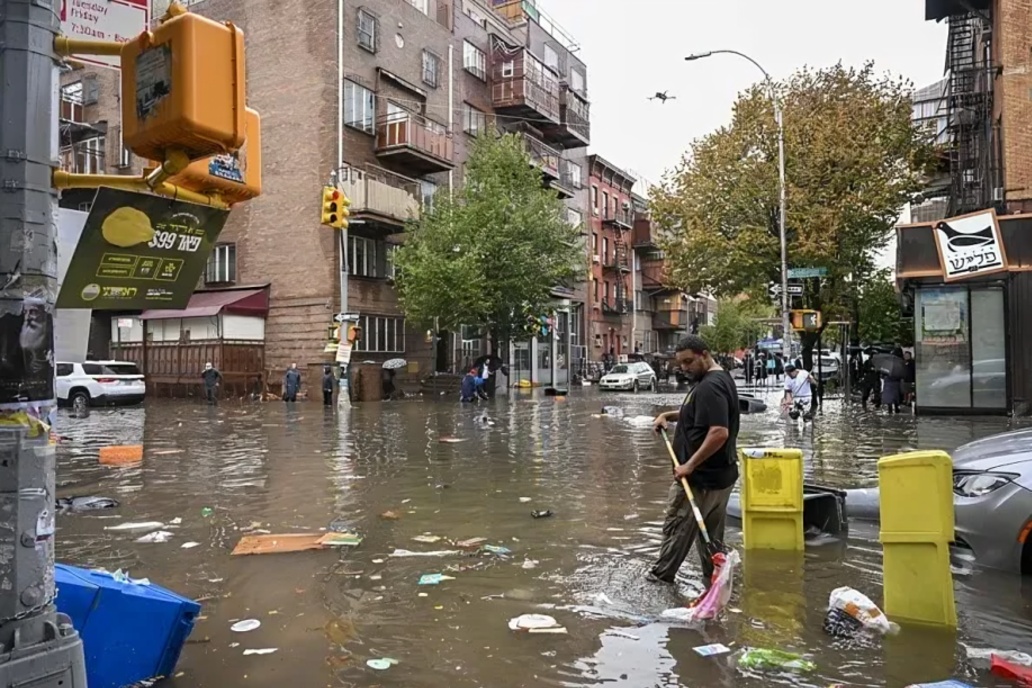
A powerful storm has caused extensive flooding across New York's Capital Region, affecting Albany, Rensselaer, Greene and Saratoga counties. Heavy rainfall led to overflowing waterways, flooded roads and widespread disruptions to transportation and essential public services, prompting emergency response efforts across the region.
State and local authorities reported that several major roads were closed after floodwaters made travel unsafe. Emergency crews were deployed to assist stranded residents, monitor rising water levels and clear debris from affected areas. Officials urged residents to avoid unnecessary travel and to follow emergency advisories until conditions improved.
Public transportation and local services also experienced disruptions due to flooding. Some routes were temporarily suspended, while utility crews worked to assess infrastructure affected by the severe weather. Authorities continued to monitor conditions and restore normal operations as floodwaters gradually receded.
Officials described the flooding as one of the most significant weather events to impact the region since Tropical Storm Irene in 2011. The comparison reflects the scale of the rainfall, the extent of flooding and the widespread effect on communities across multiple counties. Emergency management agencies stated that damage assessments would continue in the coming days.
Residents in flood-prone areas were advised to remain alert for additional weather updates and possible evacuation notices where necessary. Emergency shelters and response teams were placed on standby in locations facing the highest flood risk. Authorities also reminded the public not to drive through flooded roadways, as water depth and road conditions can change rapidly.
Weather agencies indicated that the intense rainfall resulted from a slow-moving storm system that brought prolonged precipitation across parts of eastern New York. Hydrologists continued to monitor rivers and streams for possible additional flooding as runoff from higher elevations flowed into surrounding waterways.
Local governments coordinated with state emergency management officials to provide assistance, inspect damaged infrastructure and begin recovery operations. Restoration efforts are expected to include road repairs, debris removal and assessments of public facilities affected by floodwaters.
Meteorologists noted that extreme rainfall events have become an increasing concern in many parts of the United States, highlighting the importance of preparedness, resilient infrastructure and timely emergency warnings. Officials encouraged residents to stay informed through weather alerts and guidance issued by local emergency management agencies.
As recovery efforts continue, authorities are expected to conduct detailed damage assessments to determine the overall impact of the storm on homes, businesses, transportation networks and public infrastructure. Additional updates will be released as emergency response operations progress and conditions stabilize.