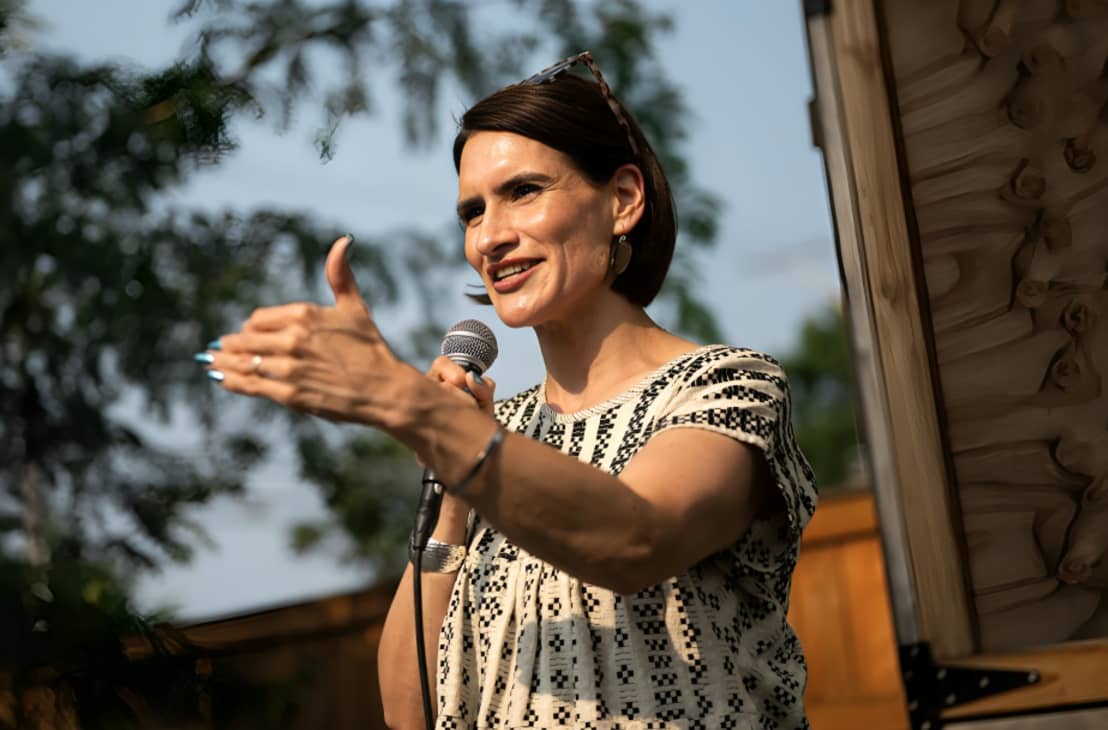

Minnesota Lieutenant Governor Peggy Flanagan has won the Democratic primary for the United States Senate, defeating Representative Angie Craig in a closely watched contest that attracted significant attention from both moderate and progressive Democrats.
Flanagan’s victory gives her the Democratic nomination for the Senate seat currently held by Senator Tina Smith, who is retiring. She will now move forward to the November general election, where she is expected to face Republican nominee Michele Tafoya.
The Democratic primary represented an important ideological contest within Minnesota’s Democratic Farmer Labor Party. Flanagan campaigned as a progressive candidate, while Craig represented a more moderate wing of the party. The contest therefore became a test of the direction Democrats in Minnesota could take ahead of the November election.
Flanagan currently serves as Minnesota’s lieutenant governor under Governor Tim Walz. Her campaign received support from prominent progressive figures, including Senator Bernie Sanders and Senator Elizabeth Warren. Her victory represents another significant result for the progressive wing of the Democratic Party in the 2026 primary elections.
Angie Craig, a US representative from Minnesota, entered the Senate contest with considerable political experience and strong fundraising support. She had positioned herself as a more centrist candidate and argued that her approach would appeal to a broad section of Minnesota voters.
The primary campaign was closely followed because the eventual Democratic nominee will compete for an open Senate seat. Senator Tina Smith announced that she would not seek another term, creating an opportunity for both parties to compete for the position.
On the Republican side, former sports broadcaster Michele Tafoya emerged as the party’s Senate nominee. Tafoya has transitioned from a career in sports broadcasting into electoral politics and will now face Flanagan in the November general election.
The Republican primary also attracted attention because businessman Mike Lindell, who had received an endorsement from former President Donald Trump in a separate Minnesota Republican contest, was unsuccessful. However, it is important to distinguish the Republican Senate race from the gubernatorial primary. Reports indicate that Lindell was running in the Republican gubernatorial primary, where Lisa Demuth won the nomination. Tafoya won the Republican nomination for Senate.
The results have therefore produced a clear general election matchup for the Minnesota Senate race. Flanagan will represent the Democratic Party, while Tafoya will represent the Republican Party.
Flanagan’s campaign has focused on issues including healthcare, affordability, workers’ rights and corporate accountability. Her progressive positions helped her build support among activists and voters seeking a stronger Democratic response to national political developments.
Her background also gives the race additional significance. Flanagan is a member of the White Earth Nation and, if elected to the Senate, would become the first Native American woman to serve in the United States Senate.
The November contest is expected to attract substantial national attention because Minnesota has become an important battleground in American politics. Although Democrats have traditionally performed strongly in statewide elections in the state, Republicans have continued to compete aggressively.
The Senate race will also be watched because the result could influence the balance of power in the US Senate. Control of the chamber will depend on the outcomes of several competitive races across the country.
For Flanagan, the immediate task is to unite Democratic voters following a competitive primary. She will need to appeal not only to progressive supporters who helped her win the nomination but also to moderate and independent voters in the general election.
Tafoya will face a similar challenge on the Republican side. She will need to consolidate Republican support while attempting to attract independent and undecided voters during the general election campaign.
The primary results also demonstrate the importance of ideological divisions within both major American political parties. Democratic voters in Minnesota chose between a progressive candidate and a more moderate challenger, while Republican voters made their own choices across several competitive contests.
The general election campaign is now expected to focus on national political issues as well as matters directly affecting Minnesota voters. Healthcare, taxes, government spending, economic conditions, immigration and the role of the federal government are likely to feature prominently in the campaign.
The November election will ultimately determine who succeeds Tina Smith in the US Senate. Smith’s retirement created an open contest, and both parties have now selected their candidates.
Flanagan’s victory gives Democrats a candidate with strong progressive backing, while Tafoya enters the general election with the Republican nomination secured. The contest is expected to become one of the important Senate races to watch during the 2026 US election cycle.
With the primary contests concluded, both candidates can now shift their focus toward the broader electorate. The coming months will determine whether Flanagan can maintain the Democratic advantage in Minnesota or whether Tafoya can build a successful Republican challenge.
The final outcome will be decided by Minnesota voters in the November general election.